
• Manufacturing Execution System

MES in Industry 4.0 – Connecting Machines for Real Manufacturing Intelligence

Empower Your Factory with MES and Machine Connectivity

Unlock real-time insights, eliminate downtime, and gain total traceability by integrating your
machines with a Manufacturing Execution System (MES) built for Industry 4.0.
What is MES in Industry 4.0

The Digital Backbone of Smart Manufacturing

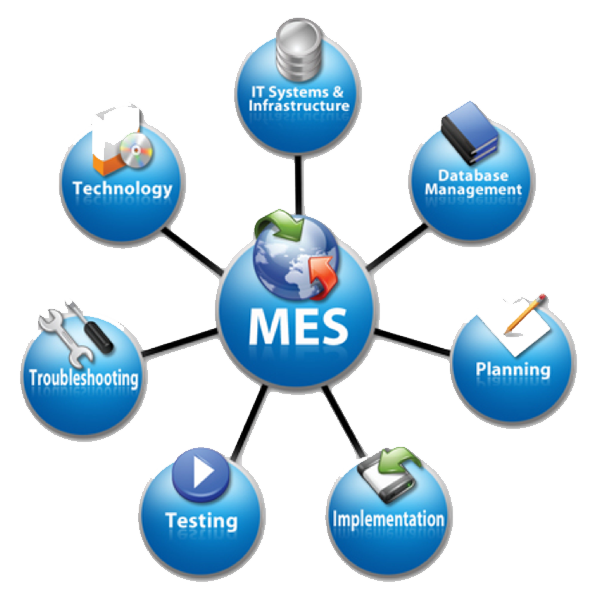
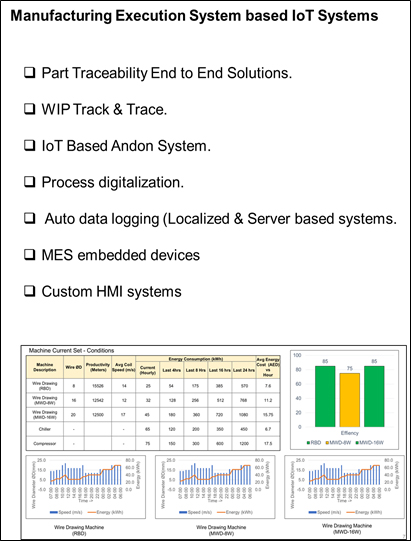
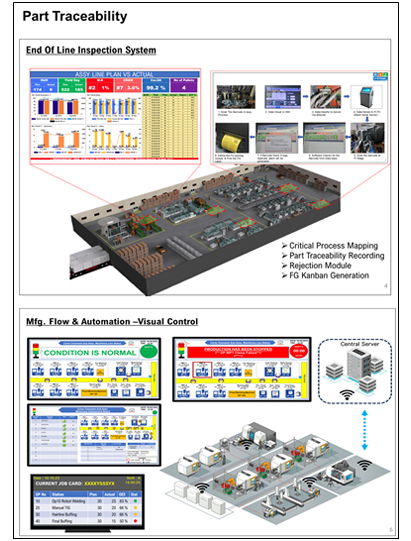
Manufacturing Execution Systems (MES) are the heart of Industry 4.0 — bridging the gap between the shop floor and enterprise systems.

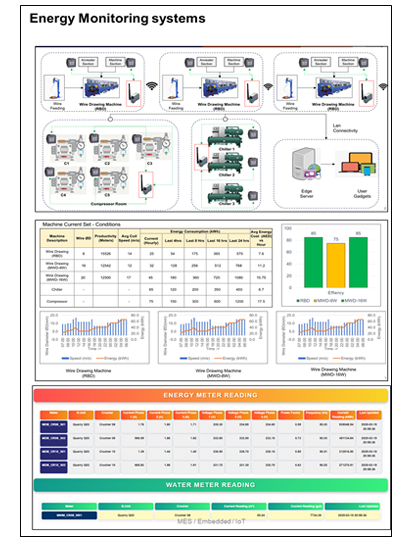
By connecting machines, PLCs, and sensors to a centralized MES platform, manufacturers achieve real-time visibility, automatic data collection, and synchronized control across production lines.

MES integrates seamlessly with ERP and cloud analytics systems, enabling data-driven decision-making and continuous improvement in production efficiency, quality, and traceability.

Our iOS-based MES empowers real-time visibility and control across the production line. Seamlessly integrate machines, people, and data for smarter, faster decision-making.
Machine Integration – The Foundation of Smart Operations

How Machine Integration Works

True Industry 4.0 value begins when your machines talk to each other — and to your MES.

Connect: Link machines and PLCs using OPC UA, MQTT, or Modbus protocols.

Collect: Stream live production data such as cycle times, temperature, and downtime.

Normalize: Standardize data from different machine vendors into a common MES data model.

Process: Use edge computing to perform real-time analytics and send summarized data to the cloud.

Integrate ERP: Sync production orders, inventory, and maintenance schedules.

Close the Loop: Allow MES to automatically adjust parameters, flag quality issues, or trigger maintenance actions.

Real Benefits of MES Integration

Get Real, Measurable Results

Higher Productivity: Detect bottlenecks, reduce idle time, and optimize production flow.

Improved Quality: Monitor process variations in real time to prevent defects.

Predictive Maintenance: Use analytics to identify potential equipment failures before they happen.

Total Traceability: Track every operation and component from raw material to finished product.

Cost Reduction: Reduce waste, manual data entry, and rework.

Informed Decisions: Access live KPIs such as OEE, yield, and downtime for better management control.

ROI Example: A production line achieving a 2% downtime reduction and 1.5% yield improvement can recover MES integration costs within 6–12 months.

Reference Architecture

From Edge to Cloud – A Unified MES Architecture

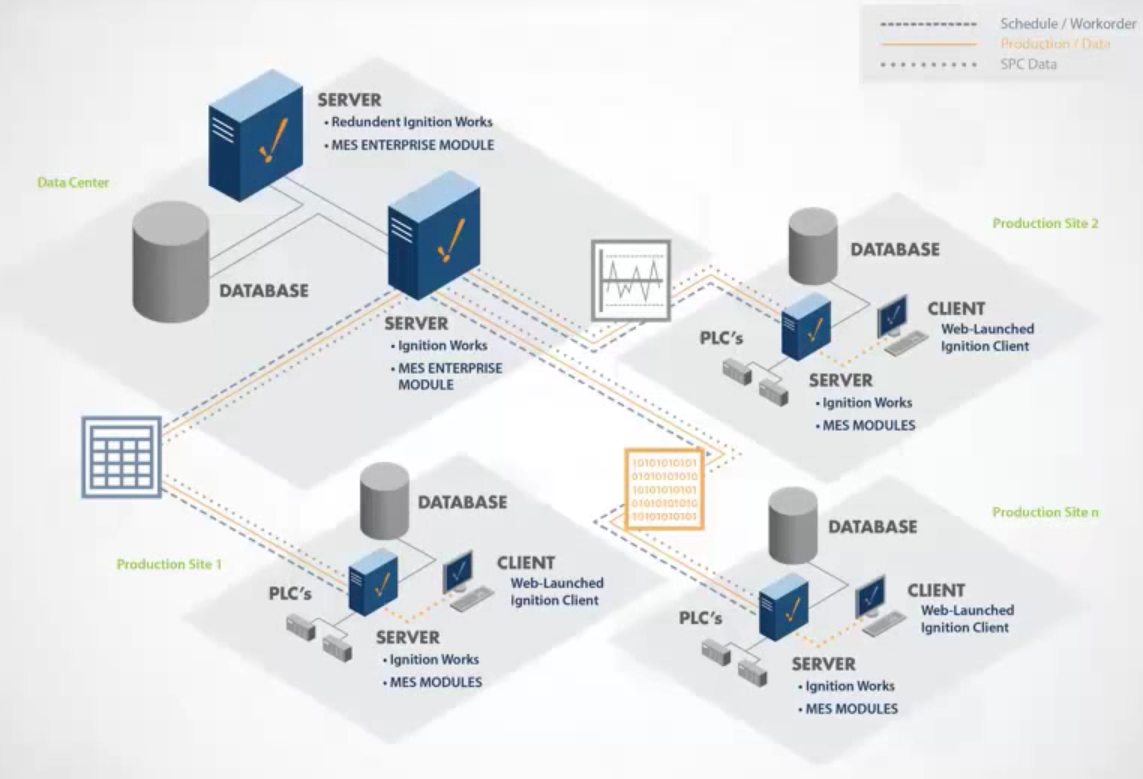
A modern MES setup follows a layered design to balance real-time control with enterprise-level analytics:

Edge Layer: Sensors, PLCs, and machine controllers capture and preprocess data.

MES Layer: Normalizes, stores, and analyzes machine data; manages production workflows.

Cloud / Analytics Layer: Performs long-term analysis, dashboards, and AI-driven insights.

ERP Integration: Connects business systems for order management, inventory, and reporting.

Protocols and Standards: OPC UA • MQTT • Modbus • REST APIs

The Future of MES

Beyond Monitoring — Toward Self-Optimizing Factories

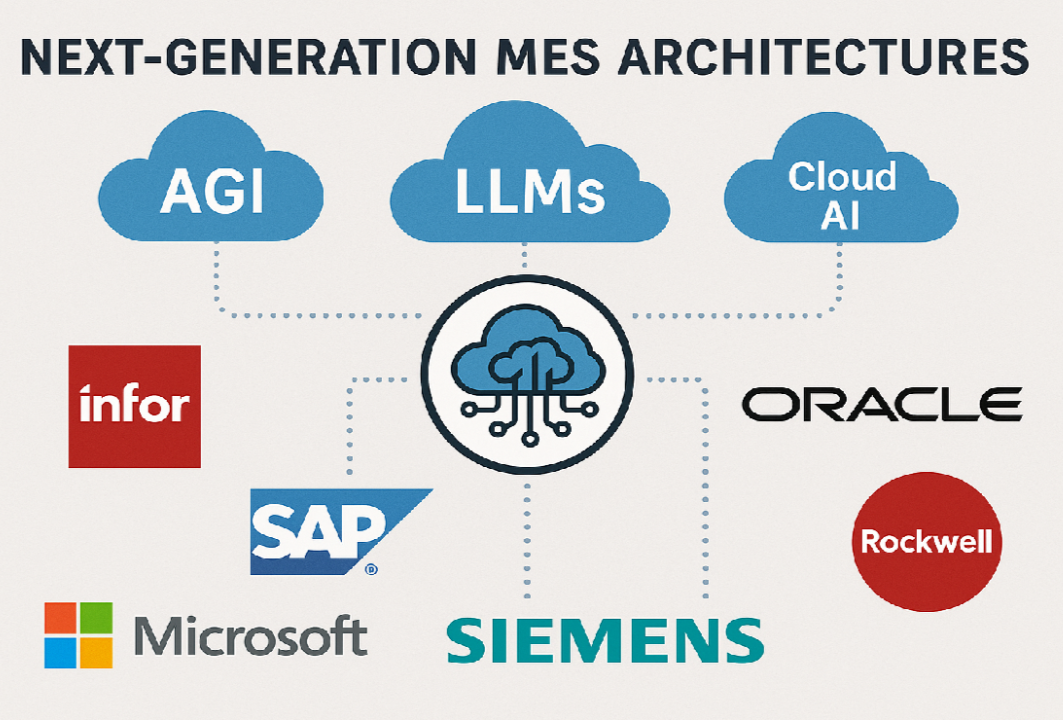
Next-generation MES systems leverage AI and machine learning to move from monitoring to autonomous optimization.

With real-time feedback loops, MES can dynamically adjust production parameters, predict outcomes, and continuously improve processes — driving factories toward zero downtime and maximum efficiency.

By integrating IoT data, predictive analytics, and adaptive workflows, the MES becomes an intelligent control center for the entire shop floor.

Call to Action / Contact

Ready to Integrate Your Machines?

Start your digital transformation today. Share your shop floor details — number of lines, PLC brands, and your key challenges — and we’ll help you plan your integration roadmap, identify quick wins, and estimate ROI.

Kickstart your digital transformation with expert guidance tailored to your shop floor. Share essential details — number of production lines, PLC brands, and current pain points. Our team will craft a customized integration roadmap, highlight quick wins, and estimate your ROI.

Send us mail